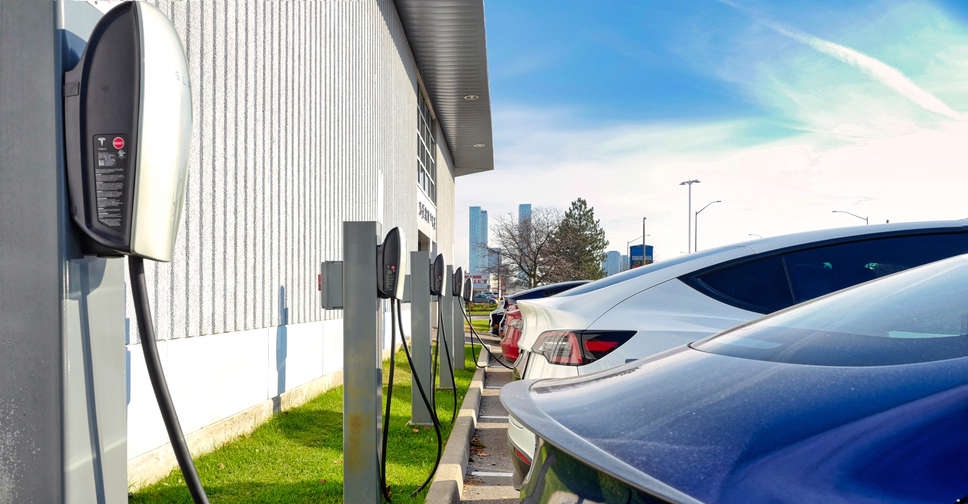
The European Union has decided to increase tariffs on Chinese-built electric vehicles to as much as 45.3 per cent at the end of its highest profile trade investigation that has divided Europe and prompted retaliation from Beijing.
Just over a year after launching its anti-subsidy probe, the European Commission will set out extra tariffs ranging from 7.8 per cent for Tesla to 35.3 per cent for China's SAIC, on top of the EU's standard 10 per cent car import duty.
The extra tariffs were formally approved and published in the EU's Official Journal on Tuesday, meaning they will take effect on Wednesday.
The Commission, which oversees EU trade policy, has said tariffs are required to counter what it says are unfair subsidies including preferential financing and grants as well as land, batteries and raw materials at below market prices.
It says China's spare production capacity of 3 million EVs per year is twice the size of the EU market. Given 100 per cent tariffs in the United States and Canada, the most obvious outlet for those EVs is Europe.
"China does not agree with or accept the ruling," China's commerce ministry said on Wednesday in a statement.
"We also noticed that the EU side indicated it would continue to negotiate with China on price commitments," the ministry said, adding that Beijing hoped to find a "solution acceptable to both sides as soon as possible to avoid escalating trade friction."
The China Chamber of Commerce to the EU said it was profoundly disappointed by the "protectionist" and "arbitrary" EU measure and was disheartened by the lack of substantial progress in negotiations to find an alternative to tariffs.
Beijing launched its own probes this year into imports of EU brandy, dairy and pork products in apparent retaliation.
It has also challenged the EU's provisional measures at the World Trade Organization.
European automakers are grappling with an influx of lower-cost EVs from Chinese rivals. The Commission estimates Chinese brands' share of the EU market has risen to 8 per cent from below 1 per cent in 2019 and could reach 15 per cent in 2025. It says prices are typically 20 per cent below those of EU-made models.
The EU's stance towards Beijing has hardened in the last five years. It views China as a potential partner in some areas, but also as a competitor and a systemic rival, but EU members are not united on EV tariffs.
Germany, the EU's biggest economy and major car producer, opposed tariffs in a vote this month in which 10 EU members backed them, five voted against and 12 abstained.
Germany's economy ministry said on Tuesday that Berlin supported ongoing EU negotiations with China and hoped for a diplomatic resolution to mitigate trade tensions while protecting EU industry.
"The Federal Government stands for open markets. Because Germany in particular, as a globally interconnected economy, is dependent on this," the spokesperson added.
German carmakers have heavily criticised the EU measures, aware that possible higher Chinese import duties on large-engined gasoline vehicles would hit them hardest.
The measures come as thousands of German industrial workers, including at the carmakers, strike for higher wages, with Volkswagen possibly about to announce shutting plants on home soil for the first time in its 87-year history.
Hungarian Prime Minister Viktor Orban said the EU was headed for an "economic cold war" with China.
However, France's PFA car association has welcomed duties, adding it backed free trade as long as it was fair.
The Commission has held eight rounds of technical negotiations with China to find an alternative to tariffs and said talks can continue after tariffs are imposed.
The two sides are looking at possible minimum price commitments for imported cars and agreed on Friday to hold a further round, although the Commission said there were "significant remaining gaps".
It remains to be seen what impact tariffs will have on consumer prices. Some producers may be able to absorb them at least partially.
In the first nine months of 2024, China's EV exports to the EU were down 7 per cent from a year earlier, but they have surged by more than a third in August and September, ahead of the tariffs, data from the China Passenger Car Association show.

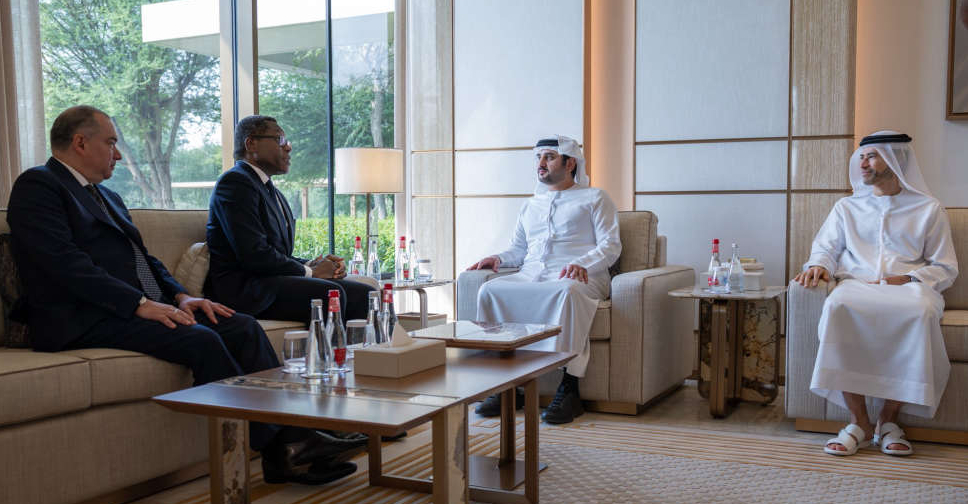 Sheikh Maktoum meets Bank of America's Bernard Mensah
 Small AI models near self-replication, Anthropic warns
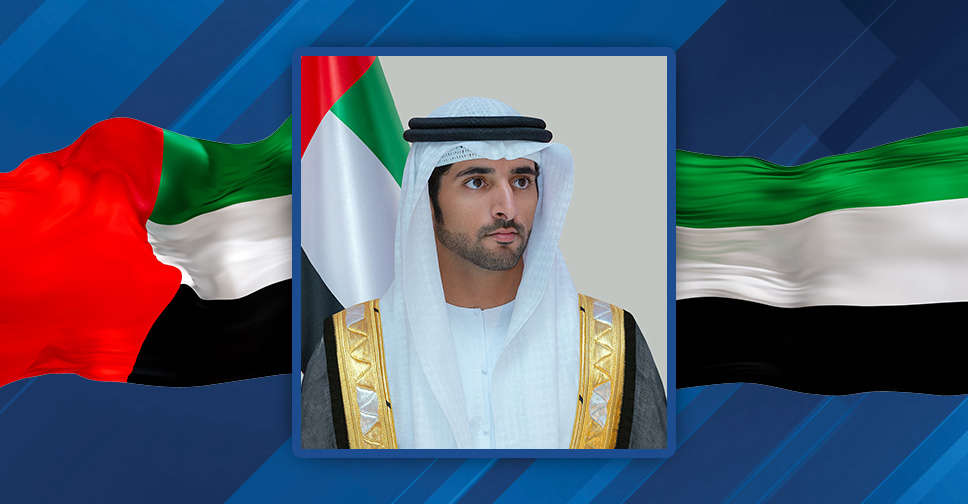 H.H. Sheikh Hamdan praises progress of Dubai Cashless Strategy
 DIEZ doubles size of Oraseya Capital fund to AED1 billion