
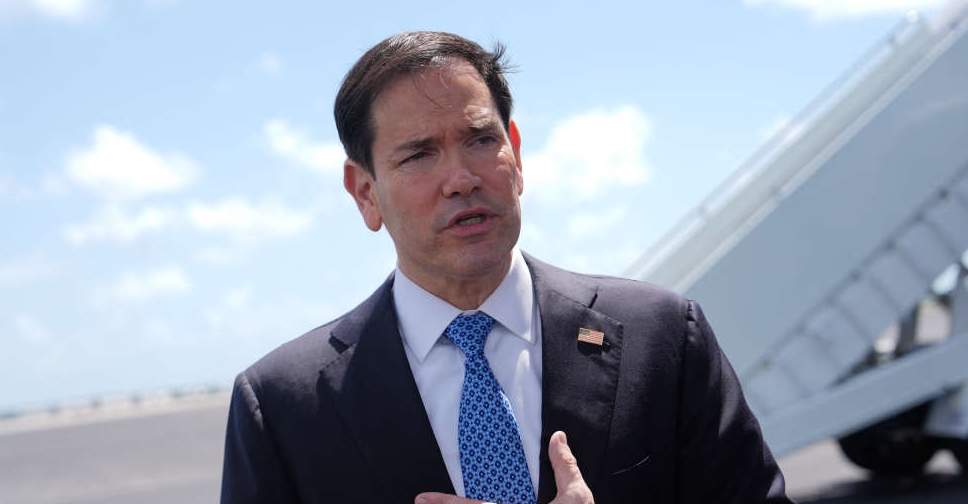
US Secretary of State Marco Rubio said on Wednesday the United States is still willing to negotiate an end to the Iran crisis but Tehran is not serious about talks, as the widening conflict disrupted two of the world's most critical energy chokepoints.
Rubio made his comments in a meeting of Southeast Asian foreign ministers a day after three oil tankers carrying Saudi crude to Asia reversed course in the Red Sea, apparently in response to threats from Yemen's Houthis.
The Houthis, who control the coast at the mouth of the Red Sea, announced a naval blockade on Saudi Arabia on Monday, opening a potential new front in the war which has killed thousands of people across the Gulf since it began on February 28 with US and Israeli attacks on Iran.
With Iran already threatening shipping through the Strait of Hormuz leading out of the Gulf, the Red Sea has served as the main alternate route out for millions of barrels of Saudi oil per day.
Rubio said Washington was "always committed to diplomacy" but doubted whether Tehran was equally committed to negotiations.
"The problem we're having right now is that they're not serious about talks. If they're serious, we're serious. If they're not, then we will do what's necessary to protect our interests, and also the interests of our allies," Rubio said in Manila.
He stressed that Iran could not be allowed to control the Strait of Hormuz, arguing it would create a dangerous precedent for the world including Southeast Asian countries, many of which have territorial disputes in the South China Sea with China.
US President Donald Trump later renewed his threats to attack Iranian infrastructure, saying the US would attack a bridge or power plant each time Tehran targets a ship in the Strait of Hormuz.
"Any time the Islamic Republic of Iran shoots at a ship in the Strait of Hormuz, whether it be by Missile, Rocket, Drone, or any other device or weapon, the United States will bomb and destroy ONE BRIDGE OR POWER PLANT, including those located next to, or in, the Capital City of Tehran," Trump said in a post on Truth Social.
With no diplomatic breakthrough in sight, the US military bombed targets across Iran for an 11th straight night on Tuesday.
Earlier, Iran targeted US military sites in Bahrain, Kuwait and Jordan and a tanker was hit in the Strait of Hormuz.
President Trump confirmed that 18 US service members had been killed so far in the war, including four in Iranian attacks on US military bases in Jordan and Iraq over the last few days.
Oil prices rose further in Asian trade on Wednesday after climbing more than 2 per cent on Tuesday following the Houthi threats, with Brent crude hovering above $91 a barrel and US gasoline back over $4 a gallon.
On Tuesday, Trump renewed his threats to again attack Iran's nuclear facilities at Natanz "pretty soon", which he said in June 2025 had been "totally obliterated" after the US military bombed the facility, buried in a mountain range, that month. Iran promised it would retaliate.

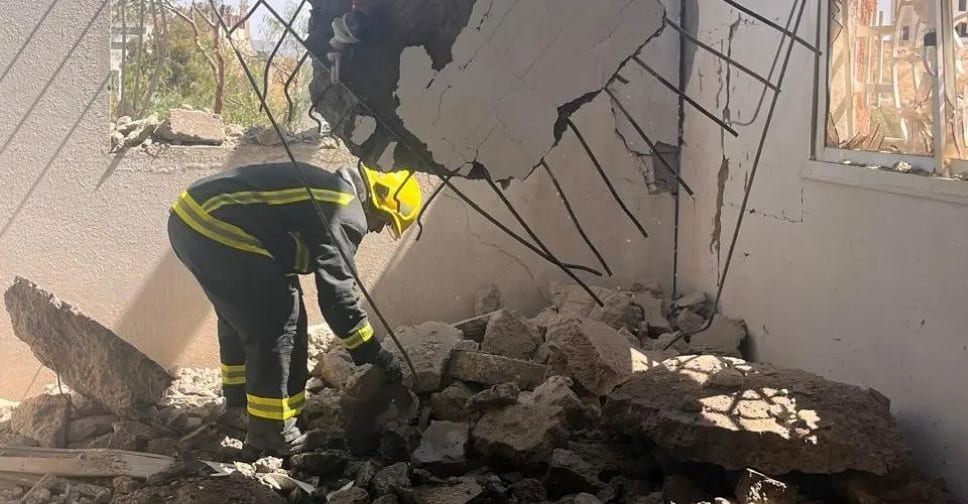 Two injured from falling debris as missiles intercepted in Saudi Arabia
 Venezuela opposition leader Machado returns to country
 Riyadh airport to designate terminals for flights from October 25
 Saudi Arabia intercepts, destroys drones, missiles targeting different regions