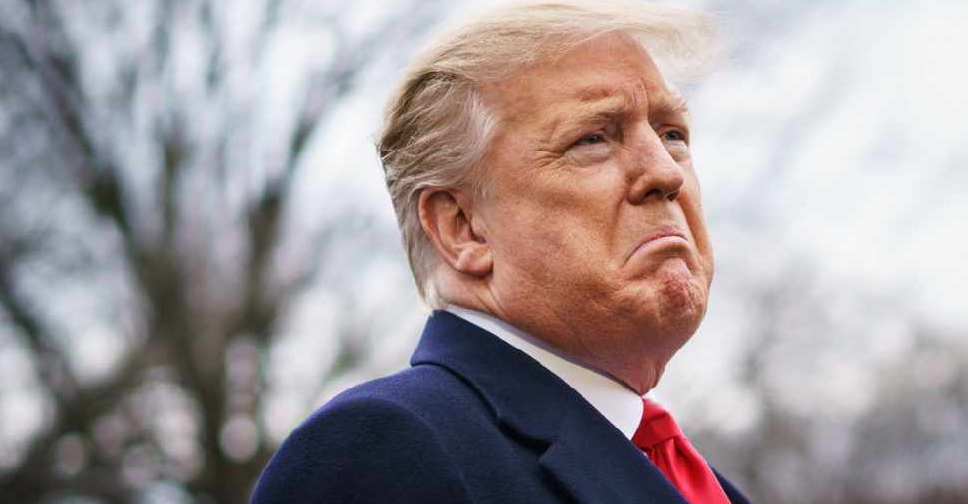
US President Donald Trump said on Wednesday Iran had taken too long to negotiate a deal and would now "have to pay the price," while Tehran said it would reassess diplomatic engagement with Washington after overnight tit-for-tat strikes.
Iran launched missile and drone attacks on US bases in Jordan, Kuwait and Bahrain in what it called retaliation for American strikes on Iranian targets around the Strait of Hormuz.
The exchange of fire, which came after Trump said Iran had downed a US Apache helicopter near the strait, marks one of the most significant escalations since Washington and Tehran agreed to a ceasefire in April.
"Iran is all talk and no action," Trump said in a social media post on Wednesday morning. "They've taken too long to negotiate a deal that would have been great for them, now they will have to pay the price!!!"
Later on Wednesday, Trump told reporters: "We're going to be attacking them, attacking them very hard."
Oil prices rose and stock markets fell after his remarks.
The US military said it had targeted Iranian air defences, ground control stations and surveillance radar sites in what it described as a "proportional response" to the downing of the helicopter, whose two crew members were rescued by a drone boat.
Iran's Gulf neighbours and Jordan activated air defences to intercept incoming missiles.
'NO SIGNIFICANT DAMAGE'
Asked about Iran's attacks on American bases, a US official told Reuters: "No significant damage. No harm to US personnel. Nearly all missiles and drones were intercepted or failed to reach their intended target."
The escalation - just days after Iran exchanged strikes with Israel for the first time since the ceasefire - casts fresh doubt on prospects for a deal to end the war, which began on February 28 with joint US-Israeli strikes on Iran.
Iran's Foreign Ministry spokesperson said Tehran would reassess diplomatic engagement with Washington after what it called repeated ceasefire violations. "Any diplomatic process requires a minimum stable environment," Esmaeil Baghaei said.
Trump told reporters on Wednesday he would not say whether he would order new strikes on Iran's power plants and bridges, while US Defence Secretary Pete Hegseth said Iran would be "unwise" to challenge the US further.
Asked about Trump's comments, Abolfazl Shekarchi, a senior spokesperson for the country's armed forces, said Iran had proven that it would respond appropriately to all threats.
Despite the belligerent language from both sides, there were signs of continuing diplomatic efforts.
A delegation from Qatar, which has been mediating between the United States and Iran, landed in Tehran on Wednesday to hold talks on the latest developments, Iranian media reported.
STRIKES AROUND HORMUZ
The US strikes overnight lasted about four hours, and a US official said nearly 20 Iranian targets were hit.
Iran's Islamic Revolutionary Guard Corps (IRGC) said Qeshm Island and the port of Sirik were attacked. Iranian media also reported explosions in Bandar Abbas, another port city, and later near Jask at the entrance to the Strait of Hormuz.
On Wednesday, two crew members of a tanker were missing and another injured after what British maritime security company Ambrey described as a suspected missile strike by US forces imposing their blockade of Iran-related shipping.
US CENTCOM did not immediately respond to a request for comment.
The IRGC said it had responded to the US attacks on Iran by attacking US bases in Bahrain, Kuwait and Jordan with drones and missiles.
It said it had fired long-range missiles at four sites at the US al-Azraq base in Jordan, including F-35 fighter jet hangars and a command-and-control centre.
Reuters could not independently verify the battlefield reports.
Jordan's military said it had intercepted five missiles launched toward al-Azraq, and that falling debris caused no injuries or damage.
Kuwait's defence ministry said it had intercepted "hostile aerial targets", while Bahrain's air defences repelled Iranian attacks, a media adviser to the King said on X.
PEACE DEAL APPEARS REMOTE
The ceasefire in early April was announced alongside plans for peace talks. Diplomats have since sought to reopen Hormuz, end a US blockade of Iranian ports and create a pathway for negotiations over Iran's nuclear programme.
Trump has repeatedly said a deal is close, but despite several rounds of indirect talks mediated by Pakistan and Qatar, the two sides still appear far apart.
Fighting in a parallel war between Israel and Iran-backed Hezbollah militants in Lebanon has continued.
Israeli airstrikes in southern Lebanon killed at least 13 people on Wednesday, Lebanese security sources said, while Hezbollah claimed fresh attacks against Israeli forces in the south.
Iran's demands include the lifting of sanctions, the release of billions of dollars in frozen assets, recognition of its control of the strait and an end to fighting in Lebanon.
Trump says Iran must end its restrictions on shipping through Hormuz, which before the war carried a fifth of the world's crude oil and liquefied natural gas. He also says any peace deal must ensure Iran cannot develop a nuclear weapon.
Iran denies any such ambition.
The UN nuclear watchdog's 35-nation Board of Governors passed a US-backed resolution on Wednesday telling Iran to declare its remaining enriched uranium stocks and let inspectors verify them. Iran branded the resolution as "political".

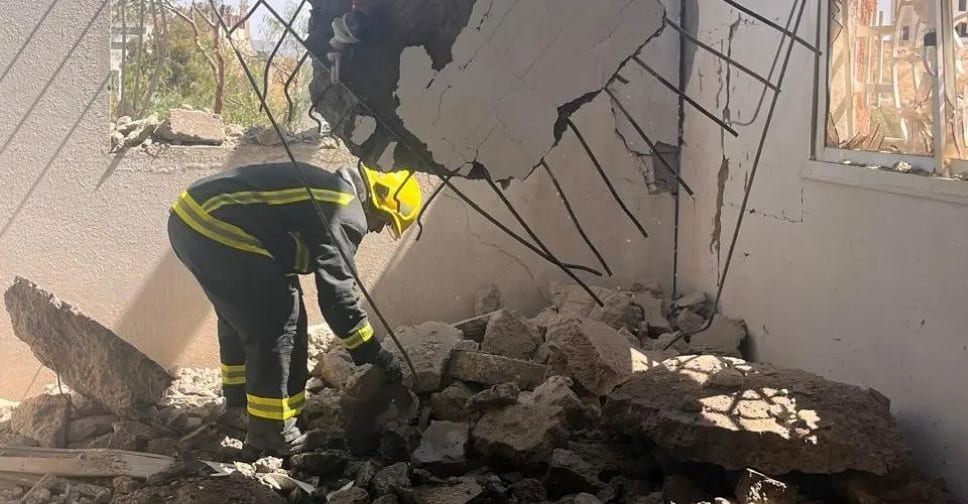 Two injured from falling debris as missiles intercepted in Saudi Arabia
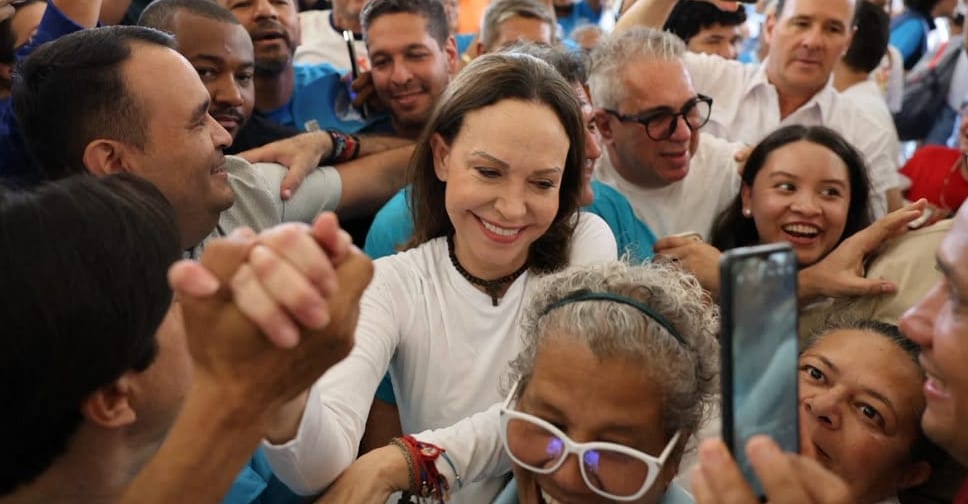 Venezuela opposition leader Machado returns to country
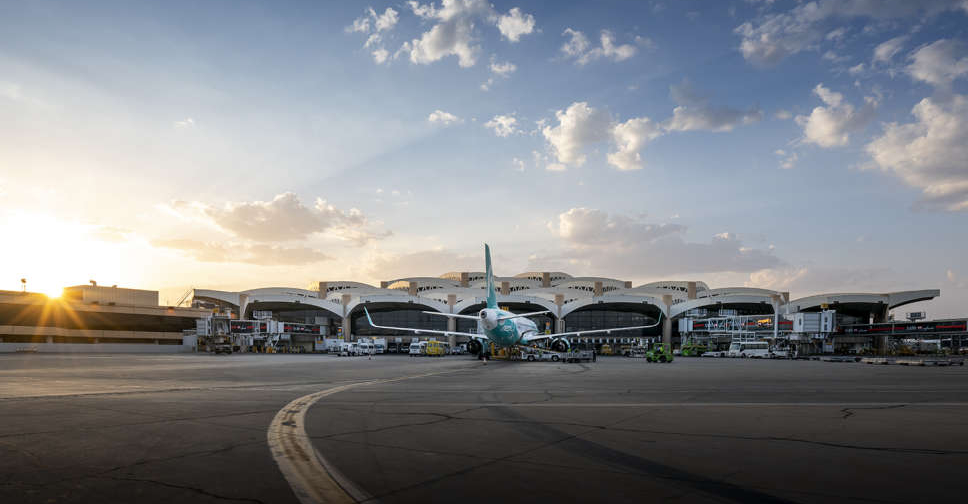 Riyadh airport to designate terminals for flights from October 25
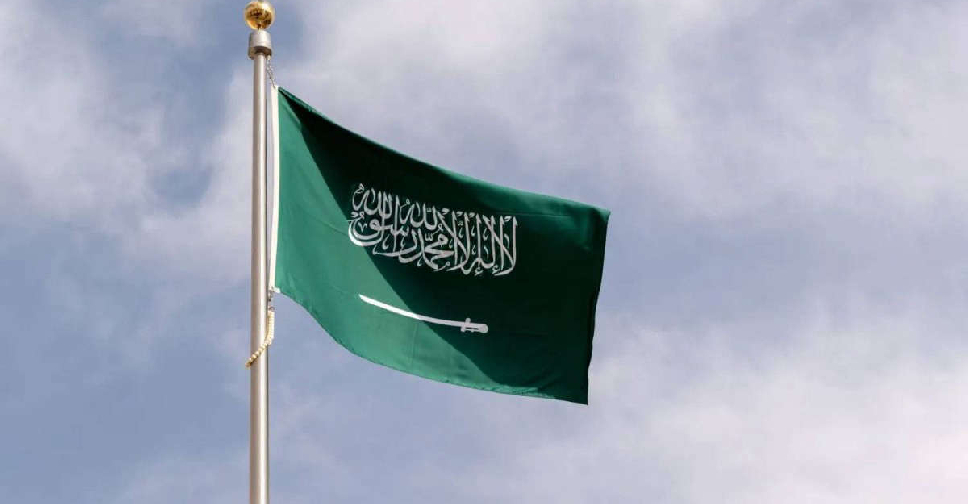 Saudi Arabia intercepts, destroys drones, missiles targeting different regions