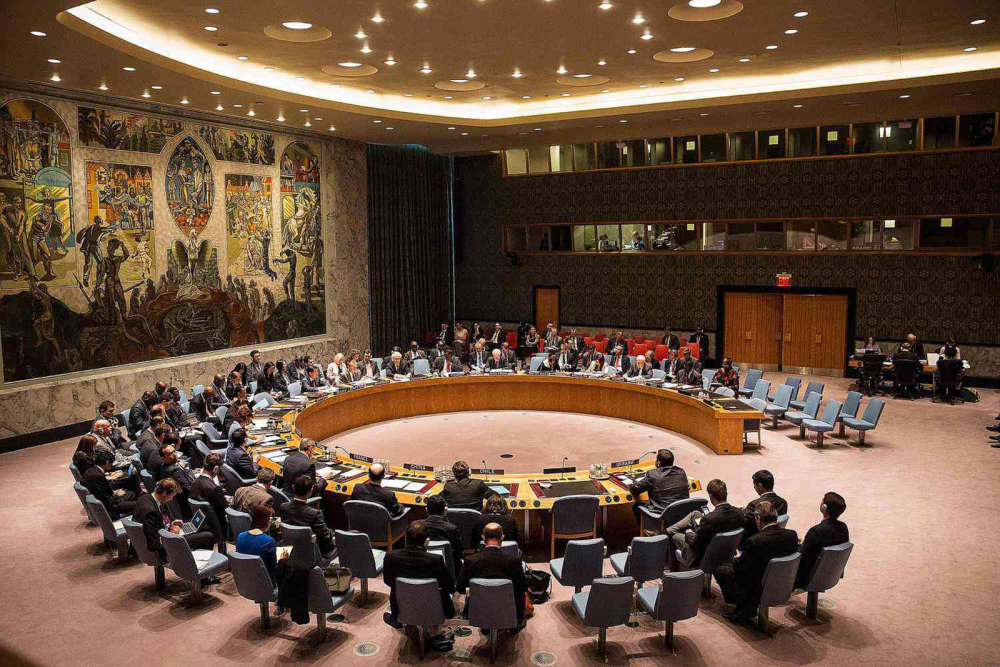
The United Nations Security Council unanimously voted on Friday to remove the final restrictions on weapons deliveries to Somalia's government and its security forces, more than 30 years after an arms embargo was first imposed on the country.
The council put the embargo on Somalia in 1992 to cut the flow of weapons to feuding warlords, who had ousted dictator Mohamed Siad Barre and plunged the Horn of Africa country into civil war.
The 15-member body adopted two British-drafted resolutions: one to remove the full arms embargo on Somalia and another to reimpose an arms embargo on al Qaeda-linked al Shabaab.
The resolution lifting the arms embargo spells out "for the avoidance of doubt, that there is no arms embargo on the Government of the Federal Republic of Somalia".
It also expresses concern about the number of safe ammunition storage facilities in Somalia, and encourages the construction, refurbishment and use of safe ammunition depots across Somalia. It urges other countries to help.
"The lifting of the arms embargo enables us to confront security threats," said Somalia's UN Ambassador Abukar Dahir Osman. "It also allows us to bolster the capacity of the Somali security forces by accessing lethal arms and equipment to adequately safeguard our citizens and our nation."
Al Shabaab has been waging a brutal insurgency against the Somali government since 2006 to try to establish its own rule.
Somalia's government had long asked for the arms embargo to be removed so it could beef up its forces to take on the group. The Security Council began to partially start lifting measures Somalia's security forces in 2013.
President Hassan Sheikh Mohamud said last week that Somalia has one year to expel al Shabaab, with the deadline for remaining African Union peacekeepers to leave looming in December 2024.


 Swiss woman with Ebola evacuated from Nigeria to Geneva
 Jordan arrests three relatives over deadly church attack after shootout, officials say
 Brazil's working class president Lula wins historic fourth term
 India to evacuate thousands as Cyclone Arnab nears eastern coast