
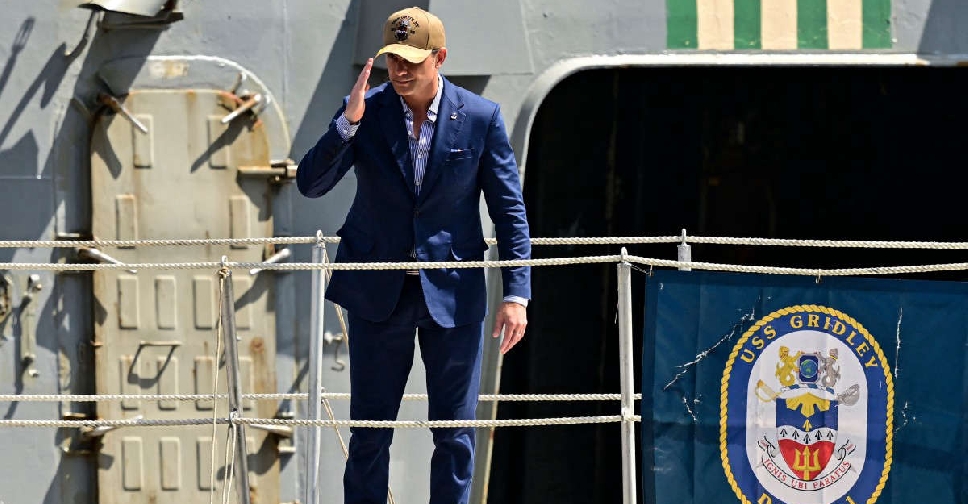
The US military has enough assets to maintain a naval blockade of Iran indefinitely, Defence Secretary Pete Hegseth said on Thursday, adding ships could be rotated in and out of the region as needed.
Hegseth's comments suggest he is advising US President Donald Trump that the military can keep applying economic pressure on Iran for as long as needed to help so-far failed negotiations to end the conflict, begun in February.
"Indefinitely the United States Navy can maintain a blockade like that because we'll rotate ships in and out, as we have, and we'll continue to," Hegseth told reporters.
He spoke in Panama after addressing the crew aboard the USS Gridley, a guided-missile destroyer, which had previously deployed to the Middle East.
Trump on Wednesday said the United States is in control of the Strait of Hormuz.
"The U.S.A. has total control over the Strait of Hormuz. I THINK WE WILL KEEP IT! Our Naval Blockade is being called, by everyone, “A WALL OF STEEL,” and there is nothing Iran can do about it," he wrote on his Truth Social platform.
After the start of the war, which began with US-Israeli strikes on Iran on February 28, Tehran effectively shut the strait, through which a fifth of the world's oil and liquefied natural gas was previously shipped.
The US subsequently imposed a naval blockade on Iranian shipping and ports, while saying it would protect freedom of navigation for vessels traveling to and from non-Iranian ports.
Since the blockade started, the US military has redirected more than 55 commercial vessels that were attempting to run the blockade, including disabling three ships and boarding two.
Trump has repeatedly oscillated between threats of escalation and claims that a peace deal is imminent.
So far, he has resisted some of the most escalatory steps like deploying ground troops or seizing strategic islands and bombing desalination plants.
Trump is under pressure to end a war that is deeply unpopular at home ahead of midterm elections in November, and high fuel prices are a top issue in rural areas that have backed him in the past.

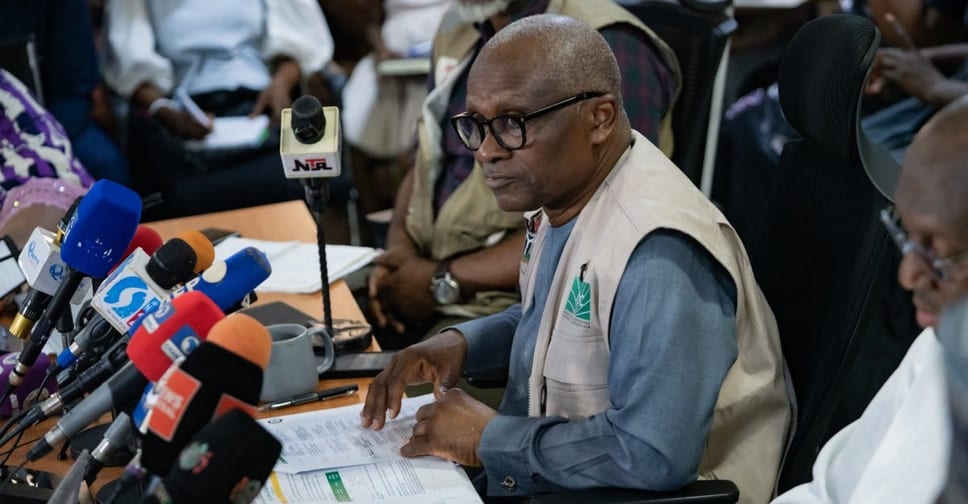 Nigeria's Ebola patient on medical evacuation flight to Switzerland, condition stable
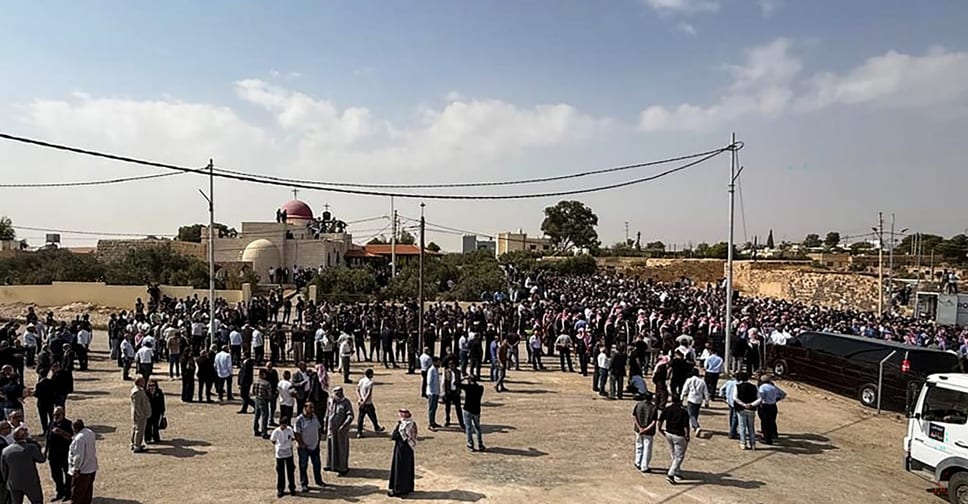 Jordan arrests three relatives over deadly church attack after shootout, officials say
 Brazil's working class president Lula wins historic fourth term
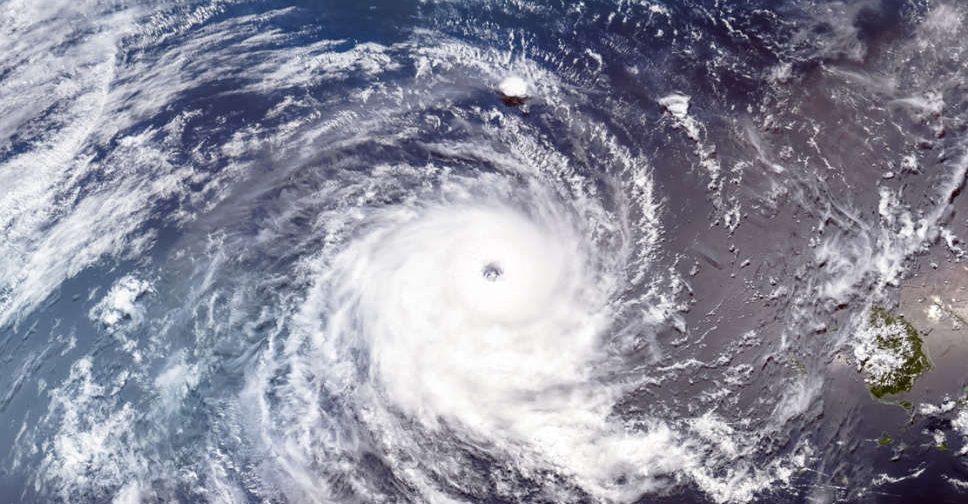 India to evacuate thousands as Cyclone Arnab nears eastern coast