

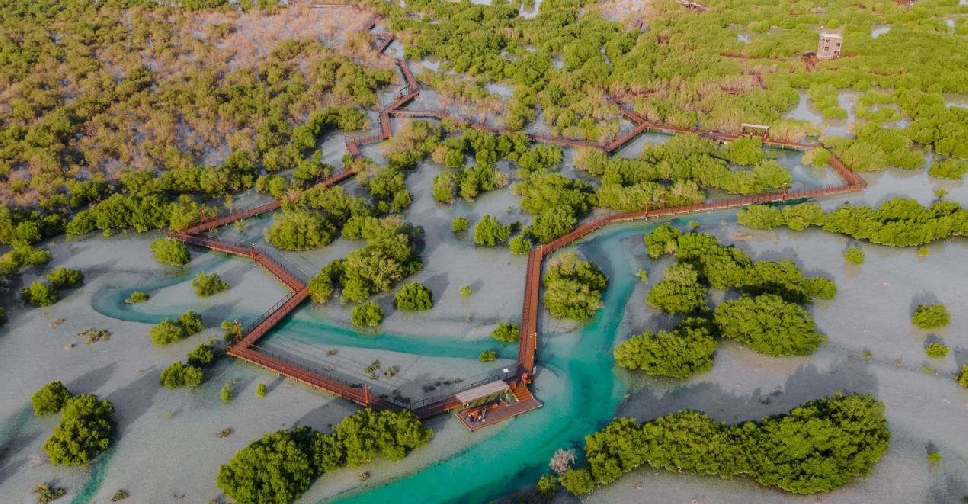
The Environment Agency – Abu Dhabi has launched a new initiative aimed at transforming the emirate’s marine ecosystem.
The programme, titled 'Hamdan bin Zayed: The World’s Richest Seas', seeks to significantly boost fish stocks and achieve one of the highest fish densities in the world by 2030.
The announcement coincides with the UAE’s National Environment Day, as well as a major milestone for Abu Dhabi: achieving a 100 per cent score in the Sustainable Fishing Index by the end of 2025, up from just eight per cent in 2018.
This achievement was highlighted during the Global Councils for Sustainable Development Goals meeting, held on the sidelines of the World Government Summit in Dubai.
Officials say the progress reflects years of integrated regulation and science‑based policies, which have helped protect marine life while strengthening food security by increasing local fish stocks and ensuring sustainable, renewable food sources.
His Highness Sheikh Hamdan bin Zayed Al Nahyan, Ruler’s Representative in the Al Dhafra Region and Chairman of the Board of Environment Agency – Abu Dhabi, described the 100 per cent Sustainable Fishing Index as a pivotal milestone in safeguarding the emirate’s marine resources.
He said the new initiative builds on an approach rooted in science, innovation and responsible marine practices, boosting productivity while preserving ecological balance for future generations.
A key project under the initiative is Abu Dhabi Coral Gardens, which will see the creation of new marine sites and underwater gardens through the deployment of 40,000 artificial reef modules, rising to 80,000 by 2030.
The reefs are designed to attract fish, increase biodiversity and strengthen marine productivity across the emirate’s waters.
The programme is supported by complementary projects, including the Coral Rehabilitation Project, which aims to cultivate four million coral colonies, and the Abu Dhabi Mangrove Initiative, targeting the planting of 50 million mangrove trees by 2030.
Advanced technologies and artificial intelligence will be used to monitor progress and maximise environmental impact.
The launch of the Hamdan bin Zayed: The World’s Richest Seas initiative by @EADTweets protects marine habitats while developing fish stocks, strengthening the sustainable use of natural resources in line with the highest global standards to support national food security. pic.twitter.com/ilz8xSPfkr
— مكتب أبوظبي الإعلامي (@ADMediaOffice) February 4, 2026

 UAE hosts second round of trilateral talks
 UAE President advances development partnerships at World Governments Summit
 Dubai scales responsible AI learning across private schools
 UAE pledges $500 million for Sudan aid at US donors' conference
 MBRGI launches drive to eradicate river blindness in Ghana by 2030
 H.H. Sheikh Mohammed honours Gambian minister at WGS
 UAE President calls for action to protect environment
 Dubai to launch self-driving pod network