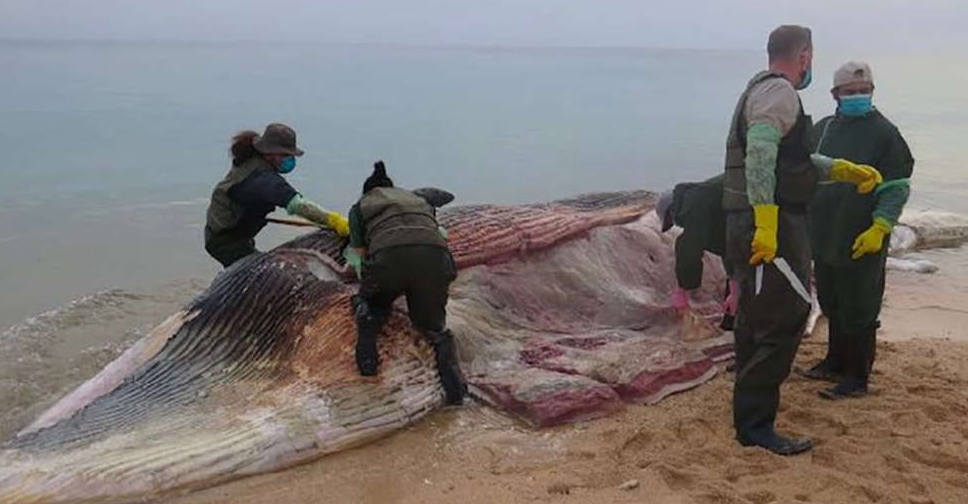
The Environment and Protected Areas Authority in Sharjah (EPAA) has revealed the results of a scientific study, considered to be the first of its kind in the Middle East, concerning the analysis of persistent organic pollutants and heavy metals in the tissues of seven dead whales.
The study was applied to seven dead whales found along the coasts of Sharjah, Dubai, Umm Al Quwain, and Khorfakkan city, comprising of five Bryde's Whales, one Blue Whale, and one Humpback Whale.
Hana Saif Al Suwaidi, EPAA Chairperson, said the tissue analysis of these whales in terms of persistent organic pollutants and heavy metals, the research team identified several causes leading to the deaths of whales. Most notable were collisions with ships and large vessels and entanglement with fishing gear, particularly the sturdy ropes in which whales become ensnared, leading to parts of their bodies being severed, such as tails and fins.
Additionally, the whales are affected by the plastic waste that fills the depths of the seas as they consume these bags and empty containers with their food, resulting in the blockage of their digestive tracts and, subsequently, their death.
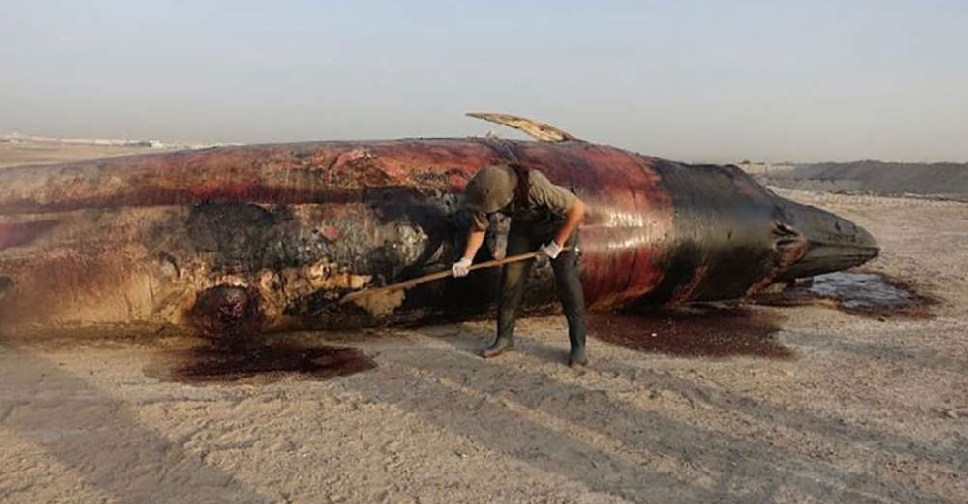
The study, conducted in collaboration with the American University of Sharjah and Zayed University, falls within Sharjah Strandings Response Programme and was overseen by the Scientific Research Department and the Breeding Centre for Endangered Arabian Wildlife team of the EPAA, along with a research team consisting of eight researchers and experts in marine life.
The study took close to seven years to complete.

 UAE fuel prices to drop in February
 UAE reopens renovated Sheikh Zayed Child Care Complex in Istanbul
 UAE President reaffirms support for regional security, stability
 UAE gifts memorial monument to Kuwait
 Sharjah Ruler receives Portugal’s highest cultural honour
 8 drivers face legal action in Sharjah for dangerous stunts during rain
 UAE, Russian Presidents hold talks in Moscow
 Sheikh Theyab reviews progress on Etihad Rail ahead of launch